
Pool regulations in Victoria: permits, barriers and registration
Pool regulations in Victoria cover more than most people expect. They apply before, during and after the build. Understood early, they become part of the design rather than a hurdle at the end.
Pool regulations in Victoria: the short answer
In Victoria, any pool or spa that can hold more than 300 mm of water needs a building permit and a compliant safety barrier. A planning permit may also be needed if your property sits in certain zones or overlays. Once built, the pool must be registered with your council and its barrier inspected and certified every four years.
Do you need a building permit for a pool in Victoria?
Yes. A building permit is required for any pool or spa that can hold more than 300 mm of water. It must be in place before any work starts on site.
Altering an existing pool barrier may also need a building permit, which is worth knowing if a renovation changes the fencing around an older pool.
When is a planning permit needed?
A planning permit depends on how your land is zoned and which overlays apply to it. Overlays are planning controls that sit over a property. Each Melbourne council sets out which ones trigger a permit for a pool. The overlays that can come into play include:
- Heritage Overlay
- Special Building Overlay
- Land Subject to Inundation Overlay
- Design and Development Overlay
The detail varies between councils. Boroondara, which covers Hawthorn and Kew, publishes its own triggers. If you are in Stonnington, which covers Toorak, check its planning pages for the overlays that apply. Your council's planning team can confirm whether a permit is needed.
Why approvals belong in the design stage
An overlay can shape the design as much as the site does. In Boroondara, for example, a Heritage Overlay triggers a planning permit when the pool would be visible from a street or public park, so where the pool sits matters. Considering the overlays at sketch stage means the design is resolved with them in mind rather than adjusted later.
Where a planning permit is needed, it adds a step to the programme. Our guide to how long it takes to build a pool in Melbourne explains how approvals fit into the wider timeline.
Safety barriers
A compliant safety barrier is there to restrict access by young children. Gates must be self-closing and self-latching. The outdoor pool area must not be directly accessible from inside the home.
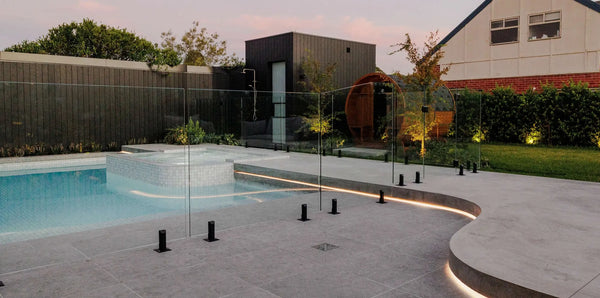
In a considered design, the barrier is part of the architecture rather than an addition to it. Glass, screens and walls can be resolved alongside the pool, the paving and the outdoor entertaining area, so the finished space meets the standard without looking fenced in.
Registration and barrier certificates
Since 1 December 2019, every pool and spa in Victoria must be registered with the council. For a new permanent pool, the owner registers it within 30 days of the occupancy permit or certificate of final inspection being issued. Councils charge a fee for registration and owners can be fined if a pool is not registered.
For a new pool, a certificate of pool and spa barrier compliance (Form 23) is lodged at the same time as the registration. The certificate is issued by a registered building surveyor or registered building inspector after they inspect the barrier. The barrier is inspected and certified again every four years, so barrier materials and gates are worth choosing for how well they hold their performance over time.
How we manage approvals
Every Fine Art Pools project is delivered entirely by our in-house team, one project at a time. We manage the building permit and, where required, the planning approval on each one. Fine Art Pools is the 2025 SPASA Pool Builder of the Year. You can read more about each stage in our pool building process, or see what shapes the investment in our guide to the cost of a concrete pool in Melbourne. If you are comparing builders, these questions to ask a pool builder include how they handle permits in your area.
Frequently asked questions
Do I need a permit to build a spa in Victoria?
Yes, if the spa can hold more than 300 mm of water. The same rules apply to spas as to pools: a building permit, a compliant safety barrier, registration with your council and a barrier certificate every four years.
Who is responsible for registering a pool with the council?
The property owner. For a new permanent pool, registration is due within 30 days of the occupancy permit or certificate of final inspection being issued.
How often does a pool barrier need to be inspected in Victoria?
Every four years. A registered building surveyor or building inspector inspects the barrier and issues a new certificate of barrier compliance, which is then lodged with the council.
Can I build a pool on a property with a heritage overlay?
A Heritage Overlay may mean a planning permit is needed. In Boroondara, for example, one is required where the pool would be visible from a street or public park. Your council's planning team can confirm what applies to your property.
Requirements are current as at November 2026 and vary between councils. Your building surveyor and council planning team can confirm what applies to your property.